Articles

Subliminal learning achieved notoriety back in 1957, when James Vicary claimed moviegoers could be induced to buy popcorn and Coca-Cola through the use of messages that flashed on the screen too quickly to be seen. The claim was later shown to be false, but though the idea that people can be brainwashed by the use of such techniques has been disproven (there was quite a bit of hysteria about the notion at the time), that doesn’t mean the idea of subliminal learning is crazy.

A general distinction you can make is that between:

  • direct study, and
  • learning from context

Direct study is more important when you're learning a non-cognate language. It's also more important in the initial stages of learning a language. Learning from context is particularly useful for cognate languages.

Of course learning a language requires both approaches, but the relative proportions will vary.

Nowadays every school has to have computers. I don't refer to legal requirementbut to perception. Schools are judged on how many computers they have. It would be more to the point if they were judged on their computer-savvy.

As I said in my discussion of different scripts, the Hellenic languages use the Greek alphabet. Here it is. I’m afraid the table is a little complicated, because (a) each letter has a name, which it’s useful to know, and (b) there are some differences in pronunciation between Ancient Greek (which is still a language that people want to learn today), and Modern Greek.

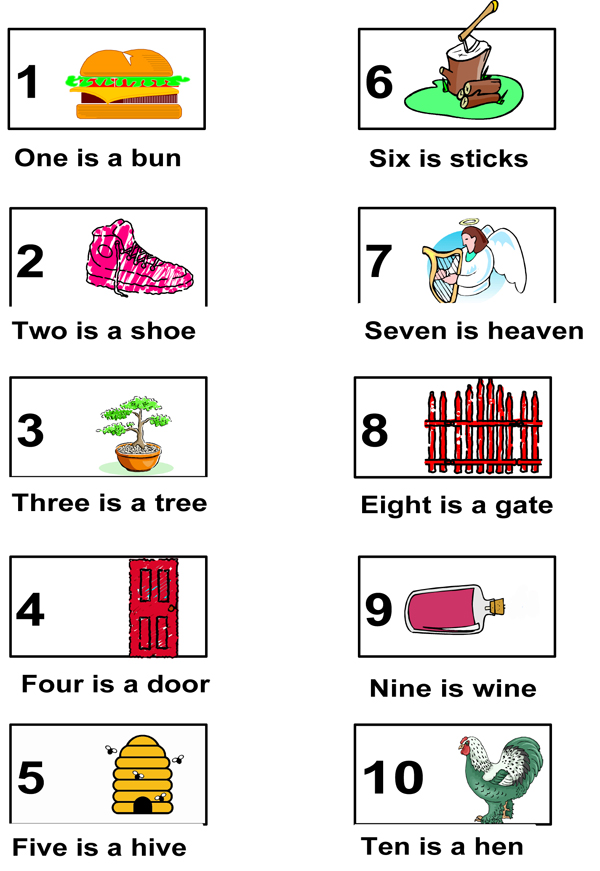
How the keyword method works

The keyword method has been especially pushed as an effective strategy for learning foreign vocabulary. It is presumably equally valuable for extending your native-language vocabulary and learning technical jargon, and has also been used successfully to teach social studies facts (e.g., the products of a country; capital cities), science facts (e.g., chemical reactions, parts of the skeletal and nervous systems) and the names and faces of people.

There are two stages to the method:

Children’s understanding, and their use of memory and learning strategies, is a considerably more complex situation than most of us realize. To get some feeling for this complexity, let’s start by looking at a specific area of knowledge: mathematics.

Children's math understanding

Here’s a math problem:

Pete has 3 apples. Ann also has some apples. Pete and Ann have 9 apples altogether. How many apples does Ann have?

This seems pretty straightforward, right? How about this one:

In the education world, fixed mind-set is usually contrasted with growth mind-set. In this context, fixed mind-set refers to students holding the idea that their cognitive abilities, including their intelligence, are set at birth, and they just have to accept their limitations. With a growth mind-set, however, the student recognizes that, although it might be difficult, they can grow their abilities.

A growth mind-set has been associated with a much better approach to learning and improved academic achievement, but new research suggests that this difference has been over-stated.

In a recent news report, I talked about a study of older adults that found that their sense of control over their lives fluctuates significantly over the course of a day, and that this impacts on their cognitive abilities, including reasoning and memory.

The limitations of working memory have implications for all of us. The challenges that come from having a low working memory capacity are not only relevant for particular individuals, but also for almost all of us at some points of our lives. Because working memory capacity has a natural cycle — in childhood it grows with age; in old age it begins to shrink. So the problems that come with a low working memory capacity, and strategies for dealing with it, are ones that all of us need to be aware of.

I’ve always been interested in the body’s clocks — and one of the most interesting things is that it is clocks, in the plural. It appears the main clock is located in a part of the brain structure called the hypothalamus (a very important structure in the brain, although not one of much importance to learning and memory). The part of the hypothalamus that regulates time is called the suprachiasmatic nuclei. These cells contain genes that switch on, off, and on again over a 24-hour period, and send electrical pulses and hormones through the body. This is the body’s master clock.